

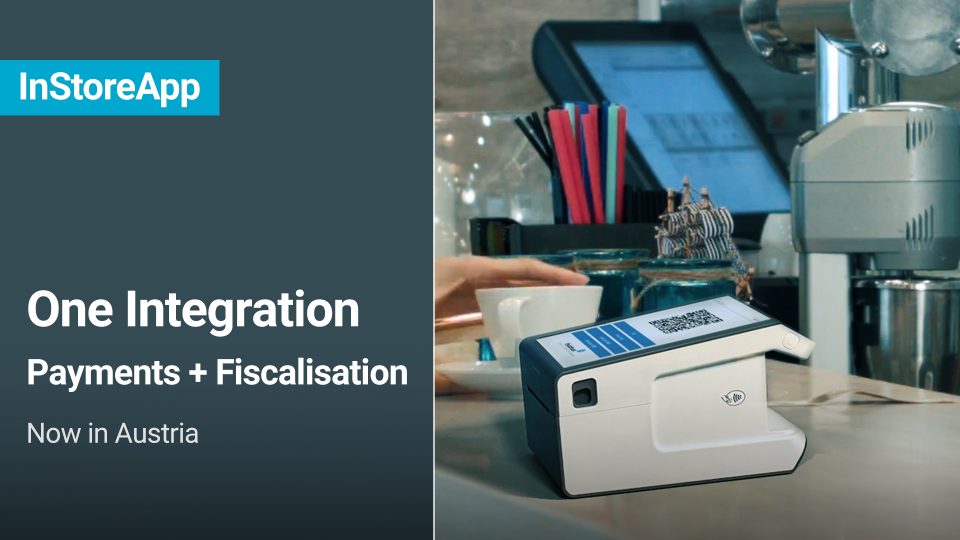
Wie fiskaltrust mit der fiskaltrust InStoreApp Payments und Fiskalisierung auf einer Plattform zusammenführt
Eine POS‑Transaktion dauert nur wenige Sekunden. Technisch steckt dahinter jedoch oft eine erstaunliche Komplexität: Zahlung, Belegerstellung, Fiskalisierung, Terminalkommunikation, Anbieterlogiken und gesetzliche Anforderungen greifen in einem einzigen Moment ineinander. Genau hier entsteht im POS‑Alltag ein zentrales Problem – denn obwohl Zahlung und Fiskalisierung faktisch zusammengehören, werden sie technisch häufig noch getrennt behandelt.
Gerade im österreichischen POS‑Umfeld sind Zahlungen und Fiskalisierung eng miteinander verzahnt. Jede Transaktion muss nicht nur korrekt abgewickelt, sondern auch rechtskonform dokumentiert werden. In der Praxis passiert beides gleichzeitig. Technisch jedoch laufen Payment‑ und Fiskalisierungslogik oft in unterschiedlichen Ebenen – und genau das erhöht die Komplexität.
Mit der fiskaltrust InStoreApp adressiert fiskaltrust genau diese Herausforderung.
Payments werden gezielt in die Middleware integriert und gemeinsam mit der Fiskalisierung über eine zentrale Plattform orchestriert. Dadurch entsteht eine klar strukturierte, skalierbare Architektur, relevant für POS-Hersteller, Partner und Händler im österreichischen Markt.
Ein Transaktionsmoment – viele technische Abhängigkeiten
Fiskalisierung ist in Österreich seit Jahren fixer Bestandteil jeder POS‑Transaktion. Die regulatorischen Anforderungen sind klar definiert, Prozesse etabliert. Gleichzeitig ist der Payment‑Markt stark in Bewegung: neue Anbieter, neue Zahlungsarten, unterschiedliche Terminal‑Strategien und individuelle Integrationen prägen den Alltag von POS-Herstellern, Partnern und Händlern.
Während Fiskalisierung meist zentral über eine Middleware umgesetzt wird, ist Payment‑Logik häufig direkt im Kassensystem verankert. Die Folgen sind bekannt: mehrfach implementierte Payment‑Logik, steigende Wartungs‑ und Update‑Aufwände, starke Abhängigkeiten von einzelnen Providern oder Hardware‑Setups sowie komplexe Rollouts über mehrere Systeme hinweg.
Das grundlegende Problem liegt dabei selten bei den Payment‑Anbietern selbst, sondern im fehlenden zentralen Ordnungsprinzip für Zahlungen.
Middleware als bewährtes Modell – auch für Payments
Im Bereich der Fiskalisierung hat sich Middleware als zentrales Architekturprinzip bewährt. Sie bündelt regulatorische Logik, stellt standardisierte Schnittstellen bereit, ermöglicht zentrale Konfiguration und skaliert über viele Installationen hinweg.
Für Payments gelten dieselben Anforderungen. Jede Zahlung ist transaktionskritisch, muss zuverlässig verarbeitet werden und steht in direktem Zusammenhang mit fiskalischen Daten. Solange Payment‑Logik jedoch direkt im Kassensystem verankert ist, wächst die Komplexität mit jedem zusätzlichen Anbieter und jeder neuen Integration.
Warum also nicht auf ein Modell setzen, das sich in der Fiskalisierung bereits bewährt hat?
Die fiskaltrust InStoreApp: Payments als Teil der Middleware
Mit der fiskaltrust InStoreApp erweitert fiskaltrust seine Plattform gezielt um den Payment‑Bereich. Ziel ist es, Zahlungsabwicklung und Fiskalisierung in einer gemeinsamen Middleware‑Architektur zusammenzuführen und so eine stabile, skalierbare Grundlage für moderne POS‑Landschaften in Österreich zu schaffen.
Payments werden dabei nicht ersetzt oder neu erfunden, sondern strukturiert in die bestehende Middleware integriert. Die fiskaltrust InStoreApp fungiert als zentrale Ebene, über die Zahlungsprozesse standardisiert angebunden, verwaltet und skaliert werden können – unabhängig vom jeweiligen Payment‑Provider oder Terminal‑Setup.
Struktur, Flexibilität und Transparenz
Die fiskaltrust InStoreApp basiert auf drei zentralen Prinzipien:
- Struktur:
Payment‑Rollouts und Konfigurationen werden zentral über das fiskaltrust.Portal gesteuert. Standardisierte Onboarding‑ und Rollout‑Prozesse reduzieren Fehlerquellen, senken operativen Aufwand und erhöhen die Betriebssicherheit. - Flexibilität:
POS‑Systeme werden einmal an die fiskaltrust‑Middleware angebunden und bleiben danach providerneutral. Anbieterwechsel, neue Zahlungsarten oder unterschiedliche Terminal‑Strategien lassen sich ohne erneute Systemanpassungen umsetzen. - Transparenz:
Klare, offen kommunizierte Preis‑ und Leistungsstrukturen schaffen Planungssicherheit – gerade in einem Payment‑Markt, der häufig von komplexen und schwer vergleichbaren Modellen geprägt ist.
Fazit: Strukturierte Payments für Österreich
Payments und Fiskalisierung gehören zusammen – und sie gehören in die Middleware.
Mit der fiskaltrust InStoreApp setzt fiskaltrust diesen Ansatz konsequent um und reduziert Komplexität dort, wo sie entsteht. Eine Integration. Eine Plattform. Ein strukturiertes Payment‑Konzept – speziell für den österreichischen Markt.
Mehr Informationen finden Sie hier
InStoreApp: In-Store App zur Einhaltung von Steuervorschriften

Why Payments Belong in the Fiscalisation Middleware
How fiskaltrust brings payments and fiscalisation together on one platform with the fiskaltrust InStoreApp
A POS transaction takes only a few seconds. From a technical perspective however, it often involves a surprising level of complexity such as payment processing, receipt creation, fiscalisation, terminal communication, provider logic, and legal requirements all come together in a single moment. This is exactly where a core challenge arises in everyday POS operations because although payments and fiscalisation clearly belong together, they are still often handled separately from a technical point of view.
In the Austrian POS environment, payments and fiscalisation are closely intertwined. Every transaction must be processed correctly and documented in full compliance with legal requirements. In practice, both happen at the same time. However, technically payment and fiscalisation logic often run on different layers and this separation significantly increases complexity.
The InStoreApp removes the separation. fiskaltrust integrates payments into the middleware and orchestrates payment and fiscalisation from a single platform. The result is a clearly structured, scalable architecture that is highly relevant for POS manufacturers, partners and merchants in the Austrian market.
One transaction many dependencies
Fiscalisation has been an integral part of every POS transaction in Austria for years. Regulatory requirements are clearly defined and processes are well established. At the same time, the payment market is constantly evolving with new providers and payment methods, different terminal strategies and individual integrations shape the daily work of POS manufacturers, partners and merchants.
While fiscalisation is typically implemented centrally via middleware, payment logic is often embedded directly into the POS system. The consequences are well known. Payment logic is implemented multiple times, increasing maintenance and update efforts, strong dependencies on individual providers or hardware setups and complex rollouts across multiple systems.
The core issue rarely lies with the payment providers themselves, but rather with the lack of a central organising principle for payments.
Middleware as a proven model – also for payments
In the area of fiscalisation, middleware has long proven itself as a key architectural principle. It consolidates regulatory logic, provides standardised interfaces, enables centralised configuration and scales reliably across large numbers of installations.
The same requirements apply to payments. Every payment is transaction‑critical, must be processed reliably and is directly linked to fiscal data. As long as payment logic remains deeply embedded in POS systems, complexity continues to increase with every additional provider and integration.
So why not apply a model that has already proven successful in fiscalisation?
The InStoreApp: Payments as part of the middleware
With the InStoreApp, fiskaltrust strategically expands its platform to include the payment layer. The goal is to bring payment processing and fiscalisation together within a single middleware architecture, creating a stable and scalable foundation for modern POS environments in Austria.
Payments are neither replaced nor reinvented. Instead, they are systematically integrated into the existing middleware. The InStoreApp acts as a central layer through which payment processes can be standardised, managed and scaled regardless of the chosen payment provider or terminal setup.
Structure, flexibility and transparency
The InStoreApp is built on three core principles:
- Structure
Payment rollouts and configurations are managed centrally via the fiskaltrust.Portal. Standardised onboarding and rollout processes reduce sources of error, lower operational effort and increase system reliability. - Flexibility
POS systems are connected once to the fiskaltrust middleware and remain provider‑neutral afterwards. Changes of providers, new payment methods or different terminal strategies can be implemented without requiring system redevelopment. - Transparency
Clear and openly communicated pricing and service structures provide planning security, particularly in a payment market that is often characterised by complex and difficult‑to‑compare models.
Conclusion: Structured payments for Austria
Payments and fiscalisation belong together and they belong in the middleware.
With the InStoreApp, fiskaltrust consistently puts this approach into practice and reduces complexity where it originates. One integration. One platform. A structured payment concept designed specifically for the Austrian market.
Learn more
InStoreApp: All-in-One Checkout Companion